Croatia
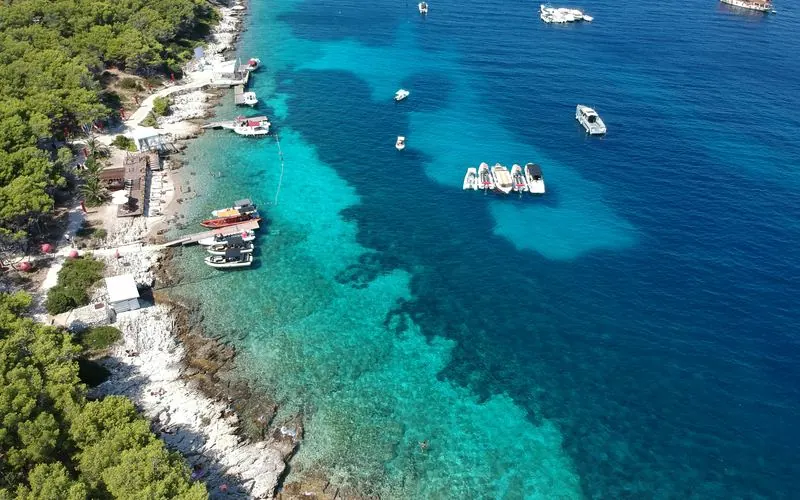
Stone harbor towns, clear Adriatic bays and island after island off the Dalmatian coast, most of them a short sail apart.
- Best months
- May to October; June and September are the sweet spot
- Sailing
- Short, line-of-sight hops; light to moderate summer winds
- Typical trip
- 7 nights, Saturday to Saturday
- Fly into
- Split (SPU), or Dubrovnik (DBV) for the south
- Start bases
- Split and Trogir area; Dubrovnik
- Currency
- Euro
Why sail here
Central Dalmatia, around Split, has more islands within a day's sail than almost anywhere in the Mediterranean. Brač, Hvar, Vis and Šolta each have their own character, from Hvar's busy harbor to the quiet coves of Vis.
Evenings are spent in old stone harbor towns, in a bay on a restaurant's mooring buoy, or at anchor. Distances are short and navigation is by sight, which leaves most of each day for swimming and exploring.
Split and Dubrovnik both have international airports and large charter fleets, and the old towns of Split and Trogir are worth a day before or after the boat.
Highlights
Hvar
The busiest and liveliest harbor on the coast, with a Renaissance square, a hilltop fortress and the Pakleni islands just offshore.
Vis and Komiža
The outermost inhabited island, quieter and greener, with two harbor towns and dramatic coves on its south side.
Biševo's Blue Cave
A sea cave near Vis lit blue by sunlight through an underwater opening, best between late morning and early afternoon. Visits are by official boat.
Bol and Zlatni Rat
Brač's south-coast town and the long pebble spit of Zlatni Rat beach, which changes shape with the wind and current.
Milna and Šolta's bays
Sheltered harbors and coves close to Split, ideal for the first or last night.
Split and Trogir
Two UNESCO-listed old towns at the start and end of the week: Diocletian's Palace in Split and Trogir's walled island center.
Choices that shape your week
Loop from Split, or one-way
A loop from Split covers Brač, Hvar, Vis and Šolta comfortably in a week. A one-way trip between Split and Dubrovnik reaches Korčula and Mljet too, if the charter company offers it.
Lively or quiet
Hvar and some harbors draw a party crowd in July and August. Vis, Šolta and the smaller bays are much calmer. Most weeks mix both.
Marinas, quays or buoys
Marinas and town quays give a walk ashore and restaurants; many bays have paid mooring buoys, and some restaurants offer free buoys to diners. Popular spots fill early in high season, so days often end by mid-afternoon.
When to go
July and August are hot, busy and the most expensive. May, June, September and early October are quieter, with warm water and lower prices.
Places to go, things to do
Swim and snorkel
- Biševo's Blue Cave
- Stiniva cove, Vis
- Pakleni islands, off Hvar
- Zlatni Rat beach, Bol
- Šešula bay, Šolta
Anchorages and harbors
- Bobovišća, Brač
- Bol, Brač
- Hvar town
- Vis town and Komiža
- Milna, Brač
- Jelsa, Hvar
- Stari Grad, Hvar
Ashore
- Diocletian's Palace, Split
- Trogir old town
- Hvar's fortress and square
- Blaca monastery hike, Brač
- Konoba dinners in island villages
A sample 7-night week
A sample loop from Split, based on commonly sailed circuits. Weather and your group decide the real one.
- Night 1Bobovišća, BračA late-afternoon departure from Split for a short first sail, about 10 nautical miles.
- Night 2Bol, BračAlong Brač's south coast to the town by Zlatni Rat beach.
- Night 3HvarAcross to Hvar town and its busy harbor.
- Night 4VisOut to the quieter outer island.
- Night 5Komiža, VisAround to Vis's other harbor town, near the Blue Cave on Biševo.
- Night 6Milna, BračThe week's longest leg, about 28 nautical miles, back toward Split.
- Night 7SplitA short sail back to the marina by Friday evening.
Practical details
Getting there
Split airport (SPU) is close to the Split and Trogir marinas. Dubrovnik (DBV) serves southern bases. From North America, most routes connect through a European hub.
Passports and entry
Croatia is in the EU and the Schengen area and uses the euro. Everyone needs a valid passport; check current entry rules for your nationality before booking flights.
Mooring and fees
As of April 2026, published guidance puts marina and mooring fees at roughly €30 a night upward, into the hundreds for a large catamaran in a popular marina in high season, with catamarans often charged 50 to 80% more. Many bays have paid buoys; some restaurants offer free buoys to diners. Croatia's tourist tax is usually included in the charter price.
Weather
In summer a steady northwest breeze, the maestral, usually builds late morning and dies at sunset. The bura, a strong northeast wind, is mainly a winter wind but can blow for a day or two in summer. The jugo, from the southeast, builds slowly and brings humid air. The captain plans around all three.
Not included in the boat price
Typically fuel, marina, quay and buoy fees, park entry where charged, provisioning, meals ashore, flights and transfers. The cost estimator shows each as its own line.
What would a week here cost?
Price a week in Croatia line by line, then send us the scenario or start a trip plan your group can vote on.
Questions about Croatia
Is Croatia a party destination?
Parts of it are, especially Hvar in July and August and the large flotilla weeks. A private boat chooses its own stops, so a week can be as quiet or as lively as your group wants.
Is it good for a first sailing trip?
Yes. Distances are short, navigation is by sight, and summer winds are usually light to moderate. There are harbors and sheltered bays everywhere if the weather turns.
Can we see Dubrovnik on a week from Split?
Only on a one-way trip, or with a long transfer. Dubrovnik is too far south for a relaxed loop from Split; a one-way week, or a week from a Dubrovnik base, fits it better.
Why do days end early in summer?
Popular harbors and buoy fields fill by mid-afternoon in July and August. Arriving early secures a spot, and leaves the evening for the town.