St Martin, St Barts & Anguilla
French and Dutch St Martin, chic St Barts and Anguilla's white-sand beaches: three islands and three countries, a few hours' sail apart.
- Best months
- December to May
- Sailing
- Trade-wind passages of 15 to 20 nautical miles between islands; sheltered anchorages on arrival
- Typical trip
- 7 nights
- Fly into
- St Maarten (SXM)
- Start base
- St Martin
- Currency
- US dollar widely used; euro on the French side and St Barts
Why sail here
Few places pack so much variety into so little water. St Martin is split between France and the Netherlands, St Barts is a polished French island with a famous harbor, and Anguilla, a British territory, has some of the best beaches in the Caribbean. Each is a few hours' sail from the others.
The French side is known for its food, the Dutch side for duty-free shopping and a lively harbor, St Barts for chic restaurants and boutiques, and Anguilla for quiet, empty sand.
St Maarten's airport is one of the best-connected in the eastern Caribbean, which makes this one of the easier islands to reach from the US.
Highlights
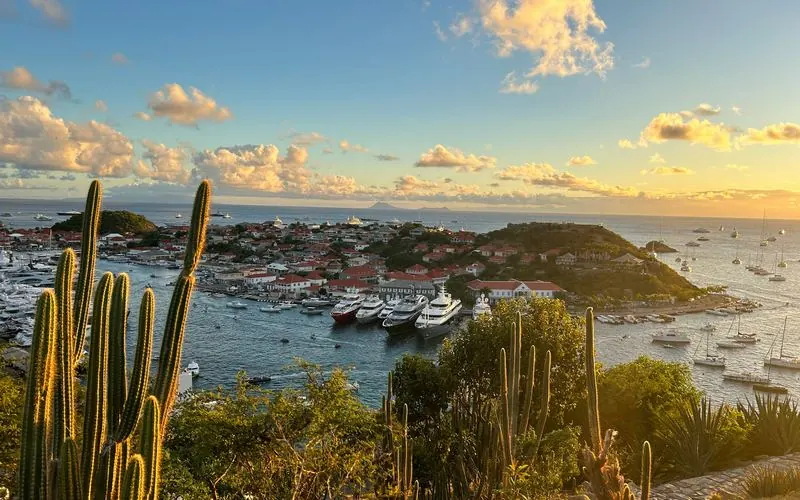
Gustavia, St Barts
A small, picturesque harbor town of boutiques, restaurants and red-roofed buildings, and the island's port of entry.
Anse de Colombier, St Barts
A sheltered bay inside St Barts' marine reserve, reachable only by boat or on foot, with free moorings.
Orient Bay and Ile Pinel
On St Martin's French side: a long beach, and a small island anchorage with beach restaurants just offshore.
Marigot and the French side
Market town, waterfront cafés and French food, a short sail from the island's west side.
Road Bay and Anguilla's beaches
Anguilla's port of entry and main anchorage, with beach bars ashore and long, uncrowded beaches around the island.
Philipsburg, St Maarten
The Dutch side's capital on Great Bay: duty-free shopping, a boardwalk and a busy cruise-ship harbor.
Choices that shape your week
How many islands
Visiting all three means three open-water passages of three to four hours each, plus customs at every border. Staying around St Martin and St Barts keeps passages shorter; adding Anguilla brings its beaches and a quieter pace.
Wind and swell
Trade winds blow 10 to 25 knots most of the year. In winter, the "Christmas winds" can blow 25 to 30 knots for a couple of weeks with a large swell, which makes the passages livelier. Summer is calmer but falls in hurricane season.
Glamour or quiet
Gustavia and the Dutch side are busy, especially in high season; Colombier, Ile Pinel and Anguilla's bays are much quieter. Most weeks mix both.
Border time and fees
Every move between French St Martin, Dutch St Maarten, St Barts and Anguilla means clearing customs, and Anguilla charges a cruising permit to go beyond Road Bay. The captain handles it, but it takes time out of the day.
Places to go, things to do
Swim and snorkel
- Anse de Colombier, St Barts
- Ile Pinel, St Martin
- Green Cay, Orient Bay
- Little Bay, Anguilla (day moorings)
- Anguilla's marine parks
Anchorages and harbors
- Marigot, French St Martin
- Orient Bay
- Gustavia, St Barts
- Anse de Colombier
- Great Bay, Philipsburg
- Road Bay, Anguilla
- Crocus Bay, Anguilla
Ashore
- Gustavia's boutiques and restaurants
- Marigot market and waterfront
- Philipsburg's boardwalk
- Beach bars in Road Bay, Anguilla
- French-side restaurants
A sample 7-night week
A sample route from St Martin based on commonly sailed circuits. Weather and your group decide the real one.
- Night 1Marigot, French St MartinA short first sail to the French side's main town.
- Night 2Orient BayAround to the east side; anchor off Ile Pinel or Green Cay.
- Night 3Gustavia, St BartsAbout 15 nautical miles across to St Barts; clear in at Gustavia.
- Night 4Anse de Colombier, St BartsA short hop to the marine reserve bay and its free moorings.
- Night 5Philipsburg, St MaartenAbout 18 nautical miles back to St Maarten's Dutch side.
- Night 6Road Bay, AnguillaAbout 20 nautical miles to Anguilla; clear in and enjoy the beach bars.
- Night 7Crocus Bay, AnguillaA short hop to a quiet anchorage before the sail back to base.
Practical details
Getting there
Princess Juliana International Airport (SXM) on the Dutch side is close to the island's marinas and has direct flights from several US cities.
Three jurisdictions
French St Martin and St Barts (France), Dutch St Maarten (Netherlands) and Anguilla (UK) each have their own customs. The boat clears in at Gustavia for St Barts and Road Bay for Anguilla. Everyone needs a valid passport; the captain handles the paperwork.
Fees to expect
As of April 2026, published guidance puts moorings and marina berths around St Martin at about $14 to $80 a night. Anchoring is free in most bays. Gustavia charges harbor fees, and Anguilla charges a cruising permit, priced by the boat's size and the length of the stay, to sail beyond Road Bay. We confirm current amounts when we quote.
Weather
Trade winds blow from the northeast in winter and the east-southeast in summer, generally 10 to 20 knots and lighter in summer, with the strongest winds around December. Hurricane season runs June through November.
Not included in the boat price
Typically fuel, moorings and harbor fees, clearance and permit fees, provisioning, meals ashore, flights and transfers. The cost estimator shows each as its own line.
What would a week here cost?
Price a week in St Martin, St Barts and Anguilla line by line, then send us the scenario or start a trip plan your group can vote on.
Questions about St Martin, St Barts and Anguilla
Can we visit all three islands in a week?
Yes. A week usually includes St Barts and Anguilla, with three passages of three to four hours and a few short hops. If the wind is strong, the captain may trim one island to keep the week comfortable.
Is St Barts expensive?
Ashore, yes: Gustavia's restaurants and boutiques are expensive. Days at anchor in Colombier or meals aboard balance it out.
How hard are the passages?
Moderate. The crossings to St Barts and Anguilla are open water with trade-wind swell, livelier than the BVI. Most other days are short hops between sheltered bays.
When is the best time to go?
December to May has the most reliable weather, with the strongest winds around Christmas. Summer is calmer and cheaper but falls within hurricane season.